- Your cart is empty
- Continue Shopping


₹2,000.00Current price is: ₹2,000.00.₹2,500.00 Original price was: ₹2,500.00.
Dimensions:
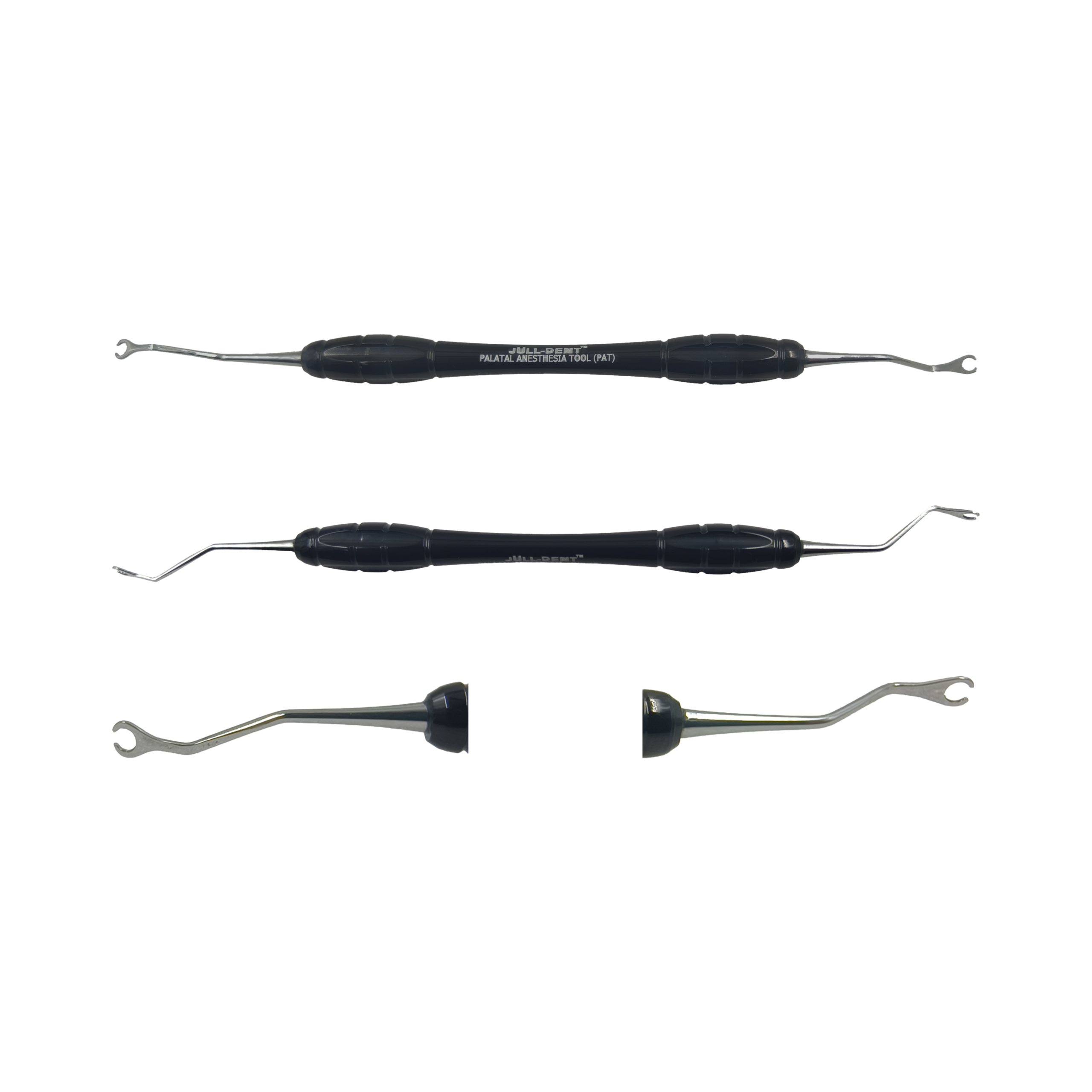
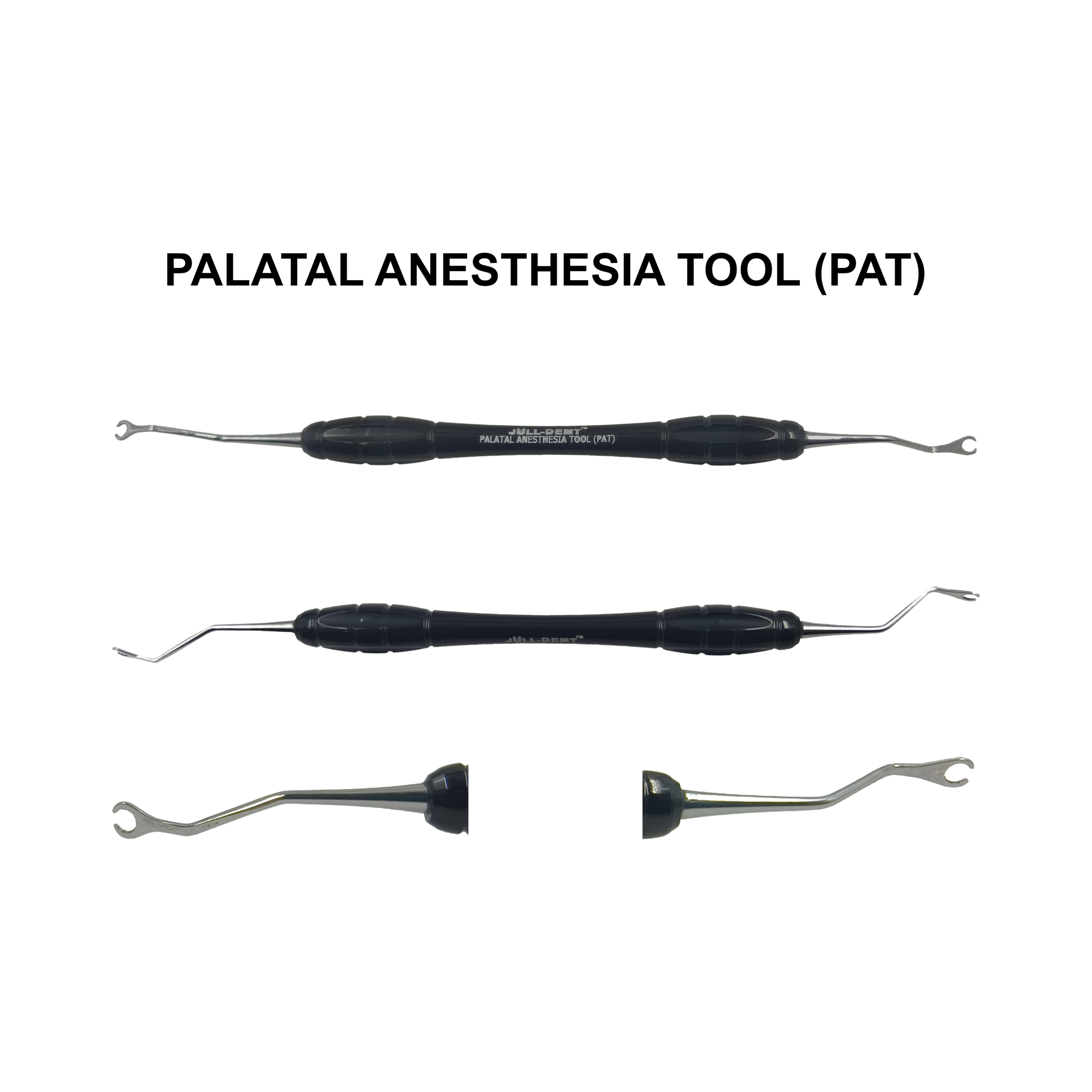
Length – 22 cms with 0 5 cm SS tip on each side.
62 in stock
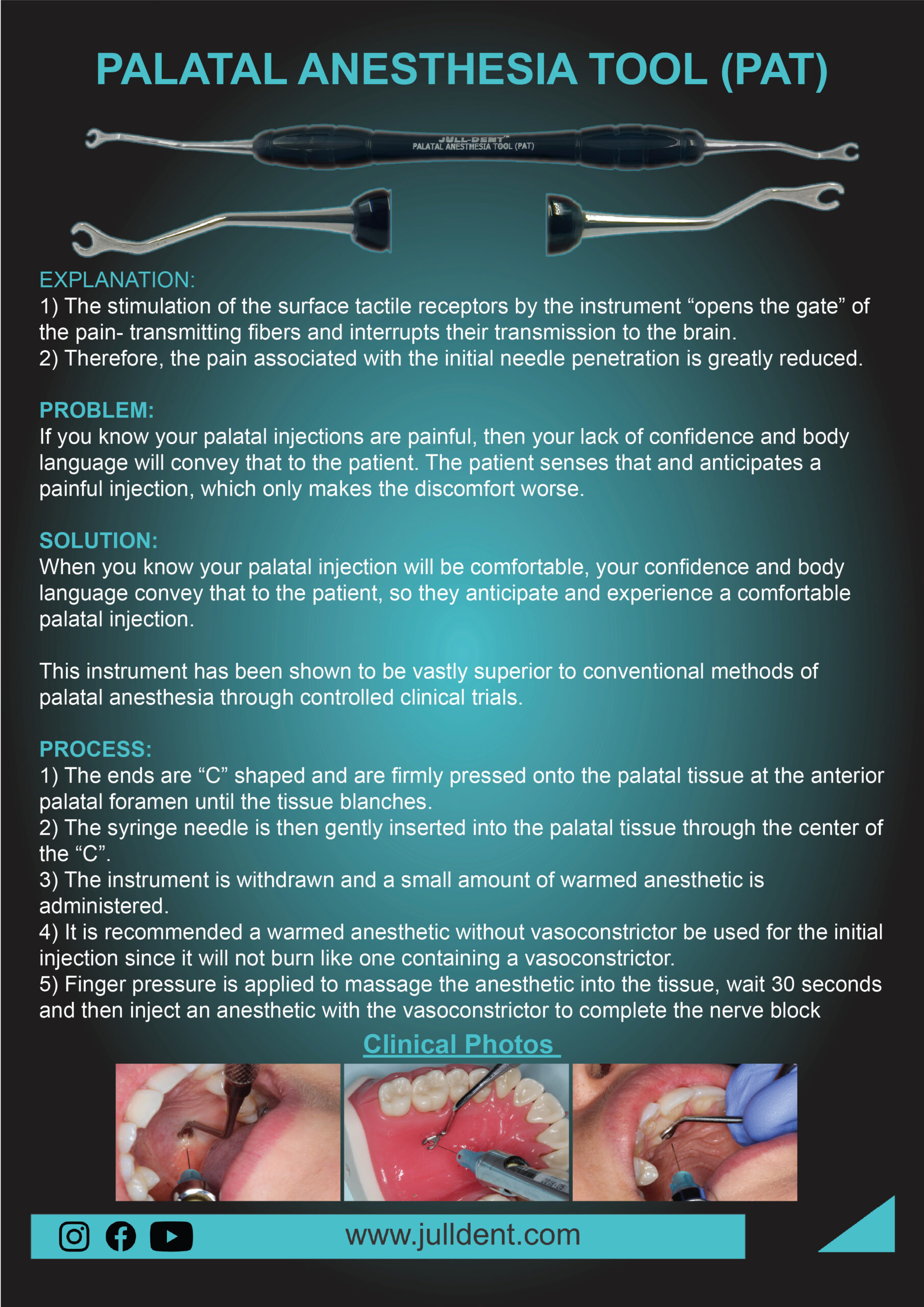
Palatal Anesthesia Tool (PAT)
Julldent 231
Concept: Palatal Anesthesia Device (PAT) uses the principles of pressure anesthesia and the “gate control theory of pain” to alleviate the pain associated with a palatal injection.
Explanation:
1) The stimulation of the surface tactile receptors by the instrument “opens the gate” of the pain- transmitting fibers and interrupts their transmission to the brain.
2) Therefore, the pain associated with the initial needle penetration is greatly reduced.
Problem:
If you know your palatal injections are painful, then your lack of confidence and body language will convey that to the patient. The patient senses that and anticipates a painful injection, which only makes the discomfort worse.
Solution:
When you know your palatal injection will be comfortable, your confidence and body language convey that to the patient, so they anticipate and experience a comfortable palatal injection.
This instrument has been shown to be vastly superior to conventional methods of palatal anesthesia through controlled clinical trials.
Usage:
The instrument is double- ended for right and left anterior palatine foramina.
Dimensions:
Length – 22 cms with 0 5 cm SS tip on each side.
Process:
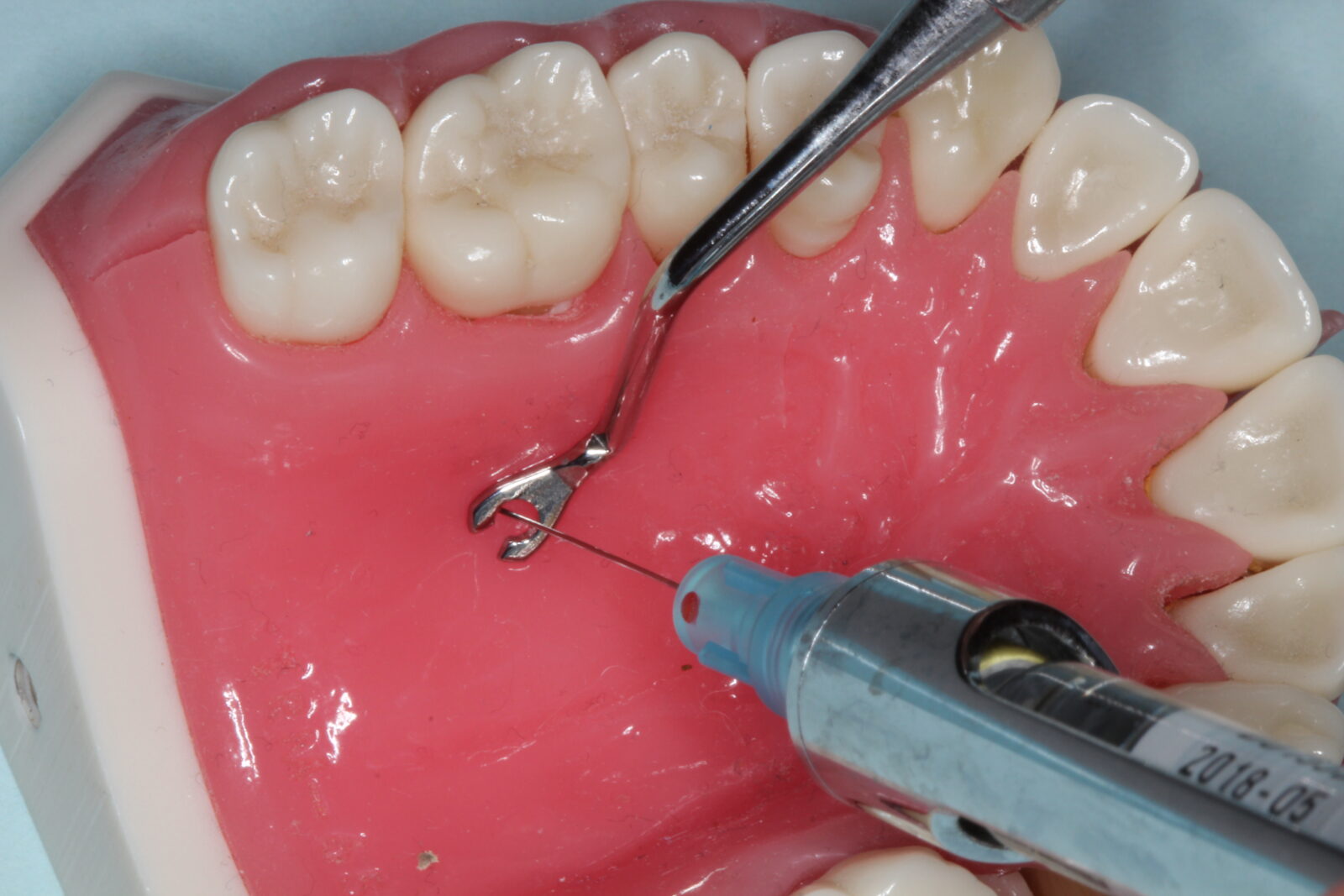
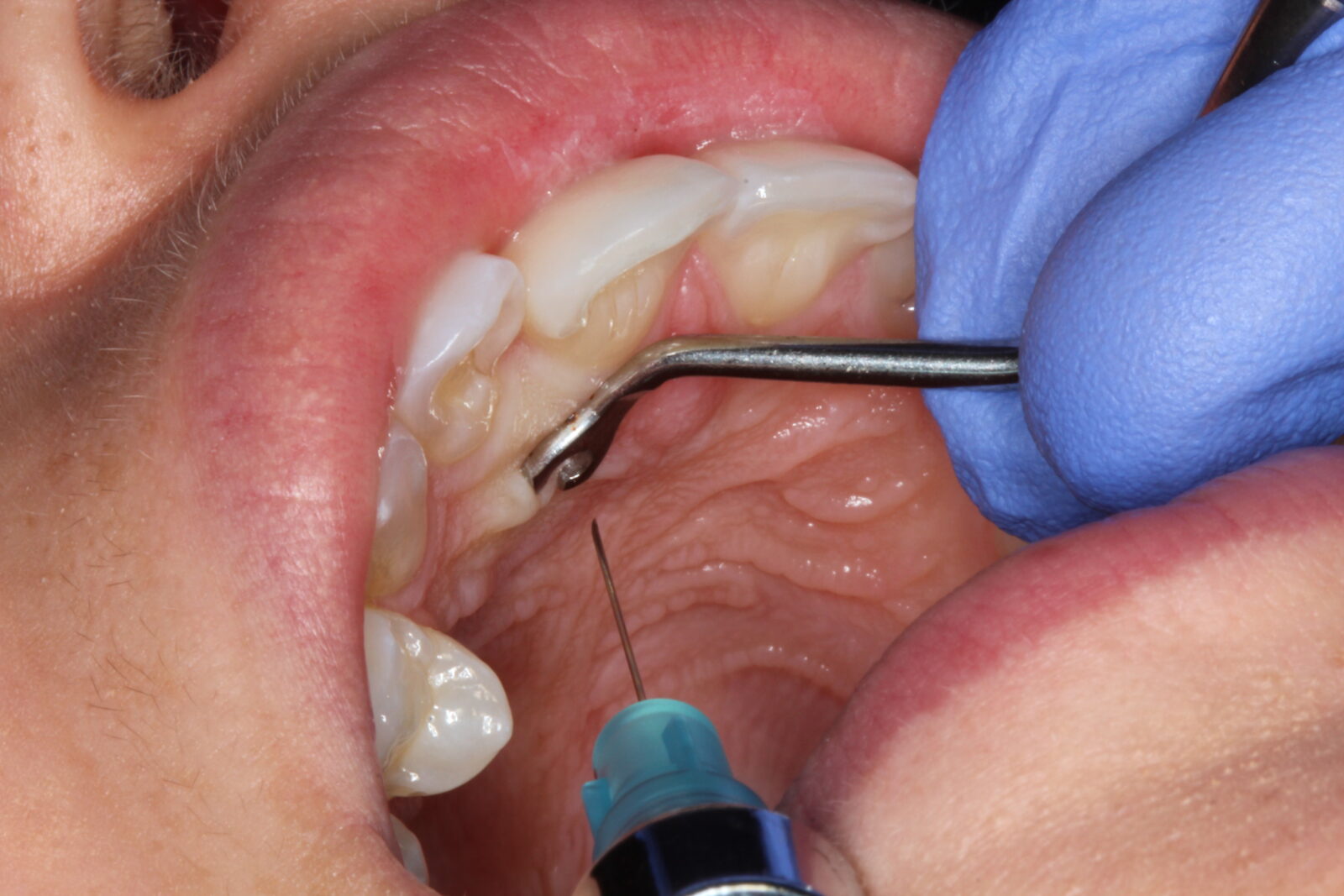
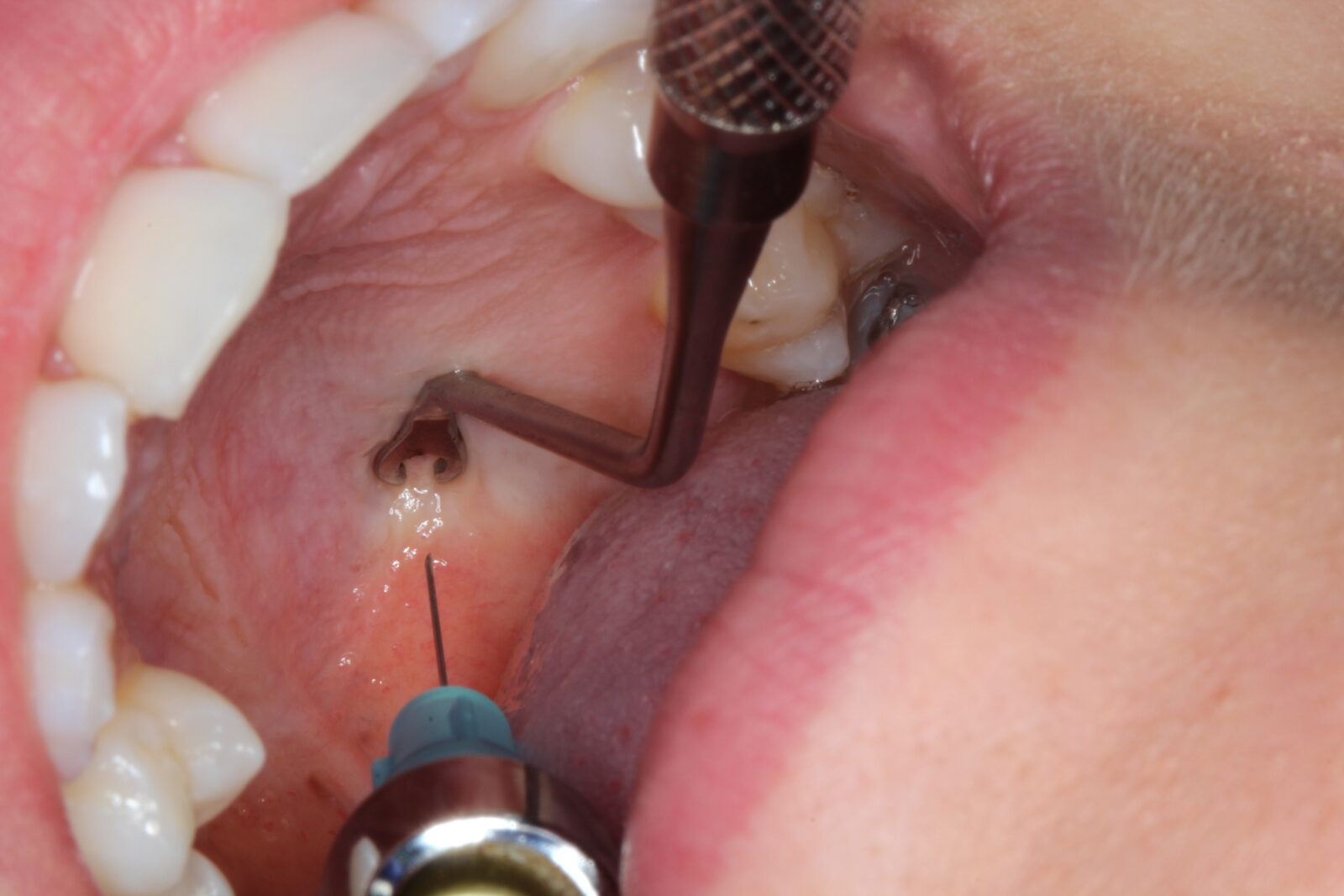
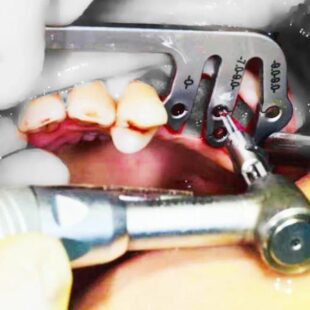
1) The ends are “C” shaped and are firmly pressed onto the palatal tissue at the anterior palatal foramen until the tissue blanches.
2) The syringe needle is then gently inserted into the palatal tissue through the center of the “C”.
3) The instrument is withdrawn and a small amount of warmed anesthetic is administered.
4) It is recommended a warmed anesthetic without vasoconstrictor be used for the initial injection since it will not burn like one containing a vasoconstrictor.
5) Finger pressure is applied to massage the anesthetic into the tissue, wait 30 seconds and then inject an anesthetic with the vasoconstrictor to complete the nerve block.
Only logged in customers who have purchased this product may leave a review.

Reviews
There are no reviews yet.