Julldent 194
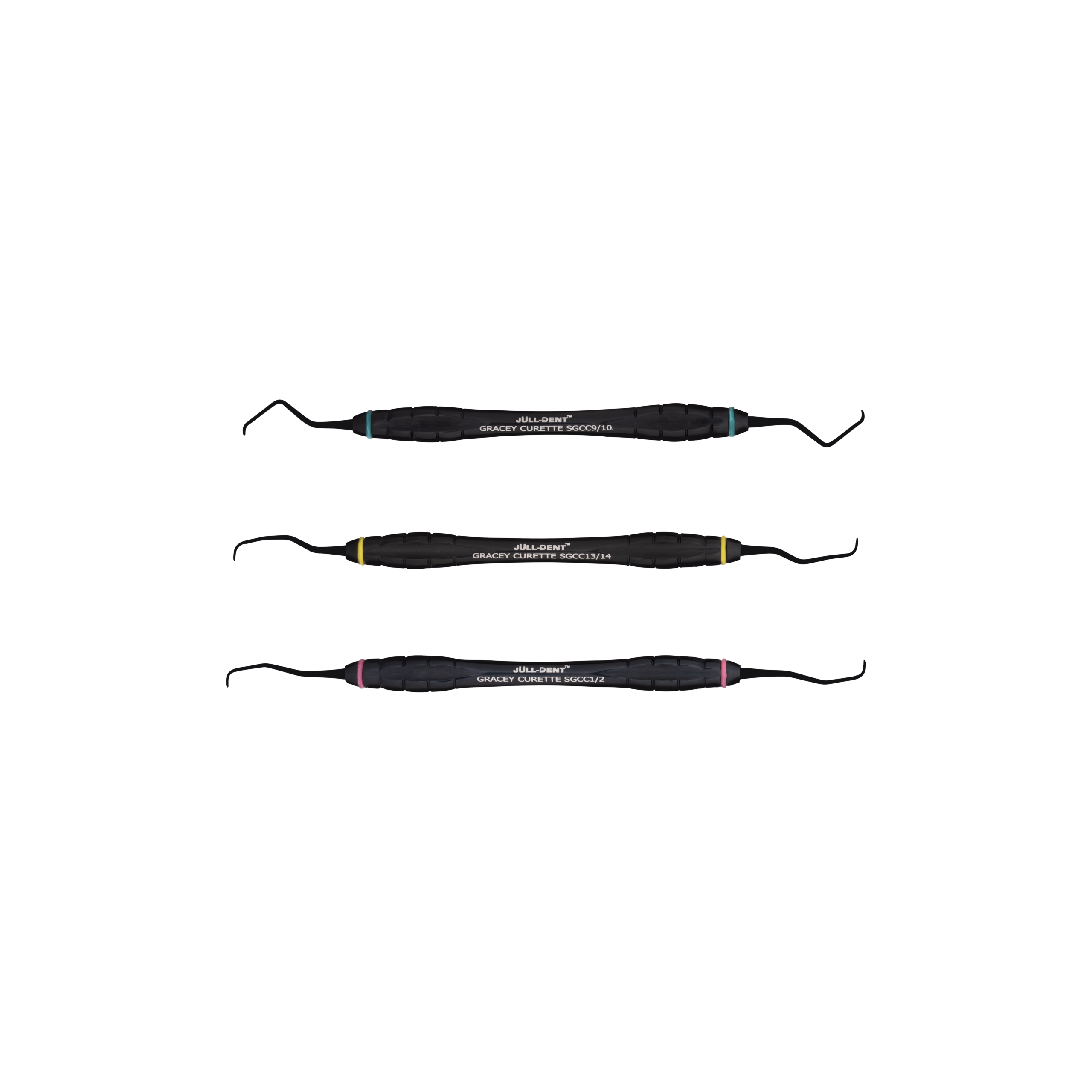
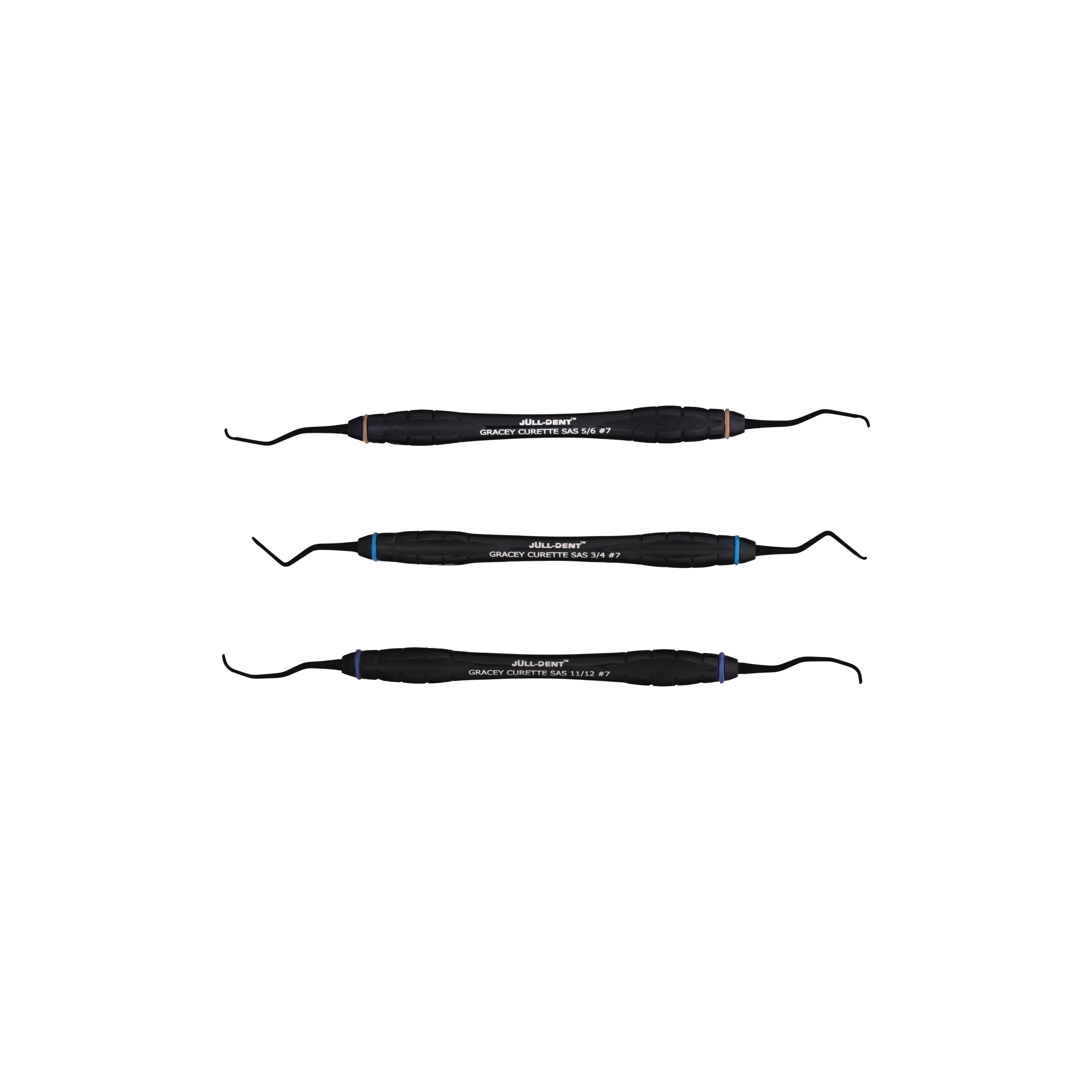
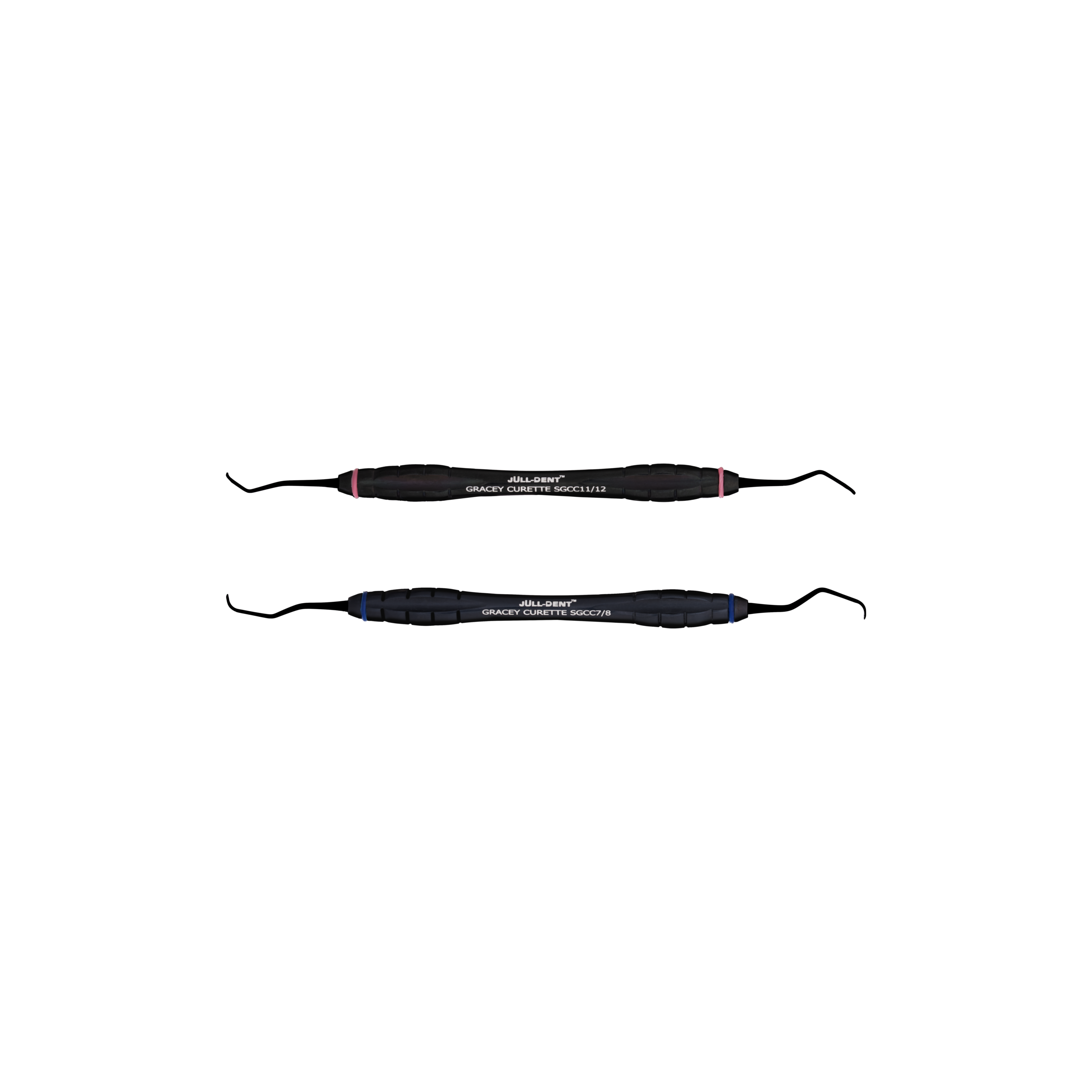
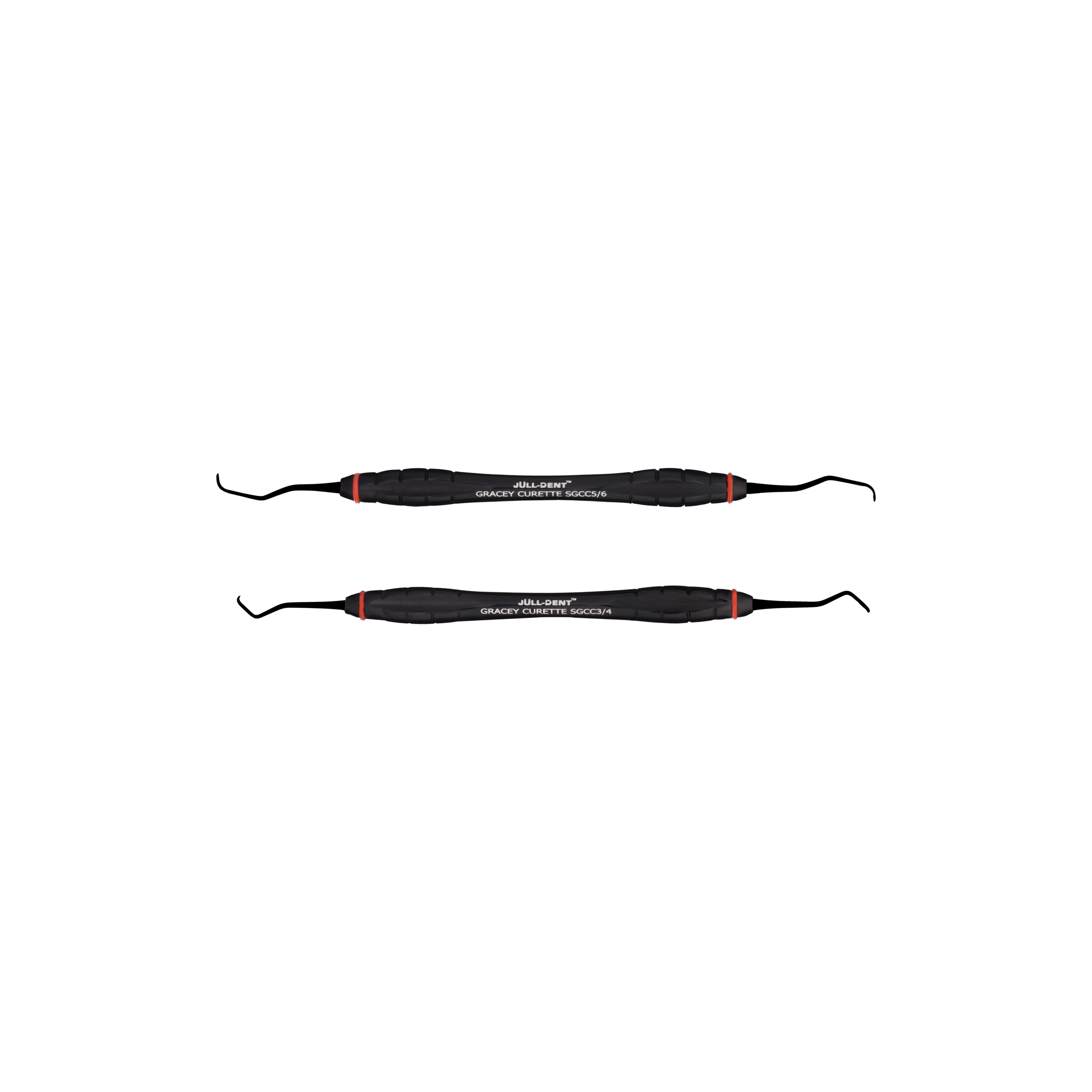
Gracey Curette Color coded
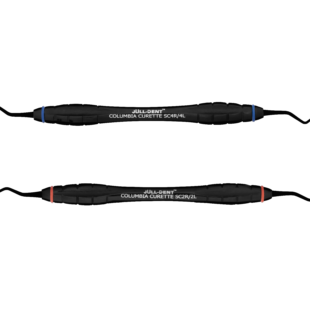
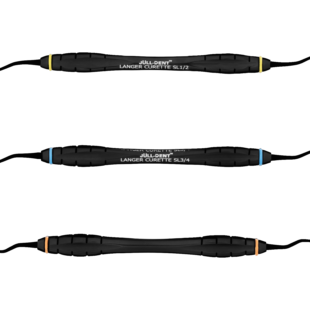
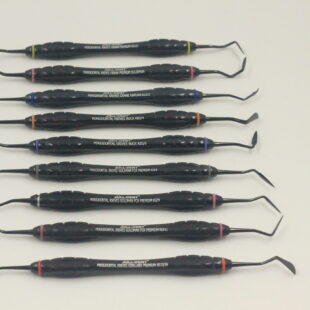
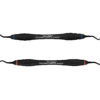
JullDent Gracey curettes, made from selective stainless steel and crafted by skilled workers using modern machines, are high-quality, area-specific hand scalers designed for scaling and root planing in subgingival surfaces with minimal trauma.
Gracey 1-2 and 3-4 Anterior teeth:
- The Gracey Curette 1/2 & 3/4 are designed for use on all aspects of anterior teeth (including canines). The instrument has a small contra-angle and a return angle resulting in an instrument that is close to the midline of the instrument handle for better stability. The shank is particularly long on Gracey 1/2s to permit access to lower anterior with the patient in a supine position
Gracey 5-6 Anterior and premolar teeth:
- Gracey 5/6s are best used interproximally on most teeth up to and including the second molars, and distally and lingually up to the second bicuspid. However, the instrument’s angulation means access to difficult areas and posteriors is limited
Gracey 7-8 Buccal and lingual surfaces:
- A Gracey 7/8 is arguably the most versatile in the range and can be used on the buccal and lingual surfaces of bicuspids and molars. The instrument has a large contra-angle with only a medium return angle and a shorter shank than the previously described curettes. The tip terminates in a hooked toe standing off-line to the instrument to allow for any tendency to twist during use to be countered by the angle of insertion
Gracey 9-10 Posterior teeth – for buccal and lingual surfaces of molars using the horizontal technique:
- The Gracey 9/10 is predominantly used on the buccal and lingual molar aspects, especially around the bifurcation, where access can be difficult. Its wide contra-angle, wide return angle, and short shank make it a distinctive instrument. The toe is very nearly in line with the instrument handle, making this pattern especially suited to the least accessible root surfaces, while still allowing good control
Gracey 11-12 Posterior teeth – mesial surfaces & Gracey 13-14 Posterior teeth – distal surfaces:
- The 11/12 and the 13/14 Gracey curettes act as a pair, permitting access to the mesial and distal root surfaces respectively. These Graceys are suited for use on both bicuspids and molars. The small contra-angle and return angle are complemented by a third angle to offset the blade, which forms a smooth-bladed toe. This third angle is exaggerated on the 13/14 to curl the toe round further. These curettes’ tips are notably long, permitting access to the posterior teeth while keeping the clinician’s hand comfortably out of the mouth
INSTRUMENTATION:
The blade of a Gracey curette is correctly adapted when the lower cutting edge is against the tooth, and the terminal shank is parallel to the tooth surface being scaled. Apply lateral pressure against the tooth (root) and pull upward, maintaining the parallel shank
- The blade is offset from the shank at 70°. This creates one cutting edge which is referred to as the lower edge
- Gracey curettes are used in a set to completely scale the dentition
How to Use :
Gracey 1/2 & 3/4 (Anterior Teeth):
- Position the lower cutting edge against the tooth.
- Ensure the terminal shank is parallel to the tooth surface.
- Apply lateral pressure and pull upward, maintaining parallel alignment.
Gracey 5/6 (Anterior & Premolar Teeth):
- Use interproximally, applying pressure to scale the teeth.
- Angle the instrument for access to the second molars, if possible.
- Use with caution on posterior regions due to limited access.
Gracey 7/8 (Buccal & Lingual Surfaces):
- Hold the instrument at a large contra-angle for versatility.
- Use the hook-shaped toe to avoid twisting.
- Ideal for bicuspids and molars.
Gracey 9/10 (Posterior Teeth – Buccal & Lingual Surfaces):
- Ideal for the molar regions, particularly around the bifurcation.
- Use the wide contra-angle and return angle to navigate difficult-to-reach areas.
- Employ a horizontal technique for better control.
Gracey 11/12 (Posterior Mesial Surfaces):
- Use on the mesial root surfaces of bicuspids and molars.
- Ensure the small contra-angle is aligned for smooth access.
Gracey 13/14 (Posterior Distal Surfaces):
- Use the exaggerated third angle to curl the toe for distal access.
- The long tip helps maintain comfortable positioning outside the mouth while reaching posterior teeth.
General Usage:
- Hold the instrument with the terminal shank parallel to the tooth.
- Apply lateral pressure against the tooth (root) and pull upward while maintaining the parallel shank.
- Ensure the blade’s cutting edge is against the tooth during use for optimal scaling.